
Guides
›
Cost Guide
·
Why Turf Smells
·
Heat & Cooling
·
Turf vs Sod
·
Pet vs Landscape Turf
·
Contractor Red Flags
Dark synthetic turf in full LA sun reaches 140 to 165 degrees Fahrenheit. That is not a marketing stat. It is a measured temperature that burns skin and dog paws.
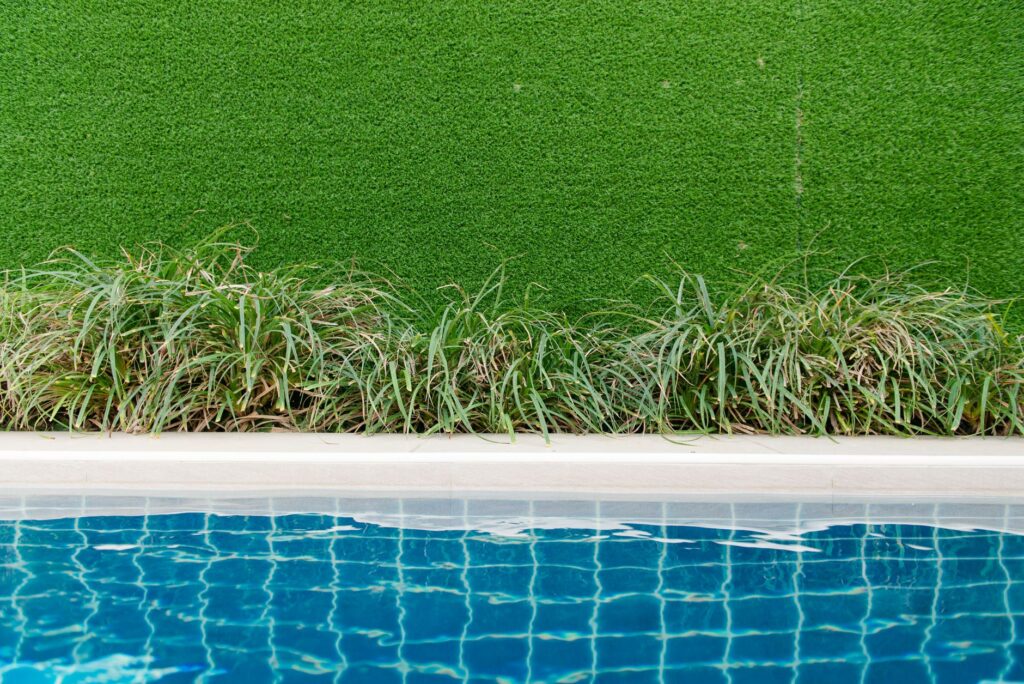
On a 90-degree day in Los Angeles with full sun, dark green artificial turf routinely measures 140 to 165 degrees Fahrenheit at the surface.
That is not a marketing claim. It is a measured physical reality documented in multiple independent studies conducted specifically in Southern California.
Human skin sustains burns within 30 seconds at 125 degrees. Dog paw pad burns occur above 120 degrees. Standard dark turf in full LA afternoon sun exceeds both thresholds well before noon from June through September.
Natural grass in the same conditions stays 40 to 60 degrees cooler through evapotranspiration. The plant releases moisture that cools the surface. Synthetic fiber has no equivalent mechanism without engineering assistance.
Darker green fibers absorb more solar radiation than lighter olive or field green tones. The temperature difference between dark forest green and lighter olive green turf in identical conditions is 15 to 25 degrees.
It is not enough to solve the problem alone. But it is a real reduction that costs nothing extra when specified at installation.
This is where most of the meaningful temperature reduction comes from.
Standard silica sand: No cooling benefit. Sand heats rapidly and retains heat. It can actually raise surface temperature above the fiber-only baseline.
ZeoFill and HydroChill: Zeolite-based minerals with high moisture retention capacity. When hydrated by dew, irrigation, or intentional wetting, they release moisture evaporatively throughout the day. Measured surface temperature reductions of 30 to 50 degrees below silica sand in controlled testing. Require moisture to perform - dry ZeoFill in a prolonged LA dry spell provides less benefit.
Crumb rubber: Not recommended. Heats to higher temperatures than any alternative.
The most effective temperature reduction available. Turf under shade trees or structures measures 50 to 80 degrees cooler than exposed turf in direct sun.
Shade is the only solution that approaches natural grass surface temperatures. No infill product performs like shade.
Real cooling, measurable reduction: ZeoFill or HydroChill when hydrated (30-50 degree reduction). Shade structures (50-80 degree reduction). Lighter fiber color (15-25 degree reduction). Misting systems while running.
Marginal or unsubstantiated claims: "Cool fiber technology" on standard PE turf typically measures 5 to 10 degrees - not the 30+ degrees sometimes advertised. Ask for independent third-party temperature testing data before accepting any cooling claim.
Dog areas and kids' play areas: Cooling infill is a safety specification, not an upgrade. Specify ZeoFill or HydroChill plus shade coverage. During peak summer hours from 11am to 4pm, keep bare skin and dog paws off exposed turf regardless of infill type.
Putting greens: Ball roll is not heat-sensitive. Player comfort is. Shade for adjacent seating areas matters more than cooling infill on putting surfaces specifically.
Yards with significant tree canopy: Less than four hours of direct summer sun means heat is a minor issue. Standard infill is appropriate and cooling infill adds cost without proportional benefit.
Describe your project and we'll respond within one business day. No obligation.
Not sure what you need? Describe the problem and we'll tell you whether repair, replacement, or a new install makes the most financial sense.
We respond within one business day - real numbers, no sales call.