
Guides
›
Cost Guide
·
Why Turf Smells
·
Heat & Cooling
·
Turf vs Sod
·
Pet vs Landscape Turf
·
Contractor Red Flags
Most turf problems are installation problems. The fiber in failed systems we inspect is usually still usable. The failure happened in the base, the drainage, or the seams - before the first roll was ever cut.
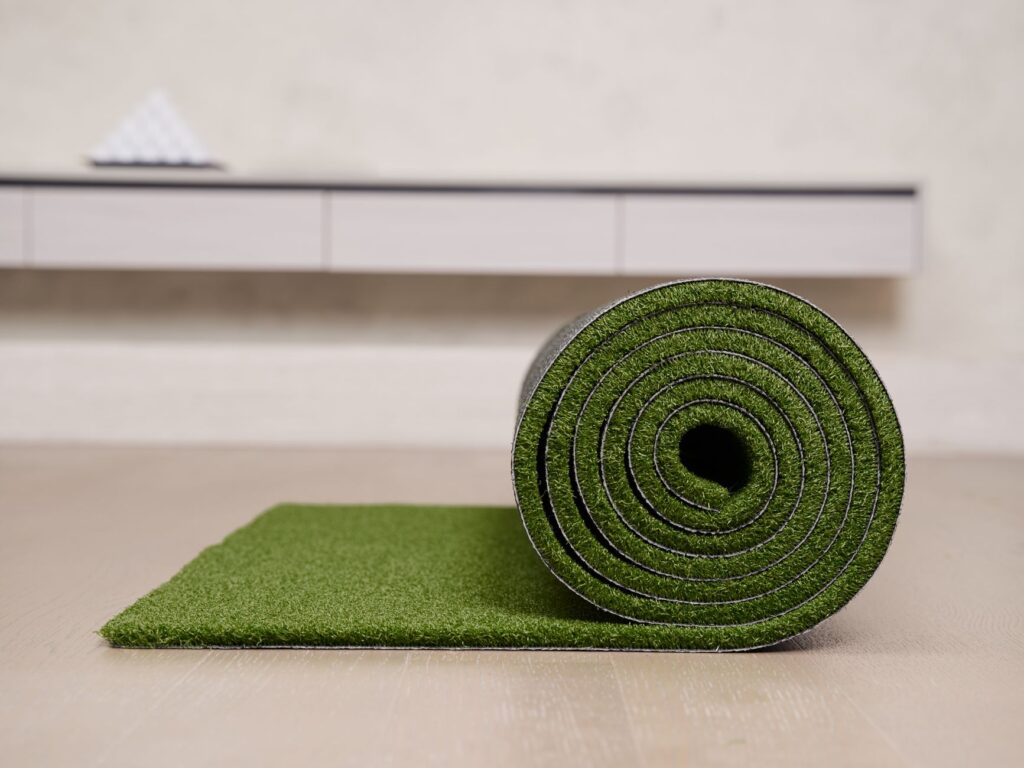
Artificial turf doesn't fail. Installations fail.
The turf fibers in most systems we inspect are still usable. The problems are in the base, the drainage, the seams, and the edges. Most of what goes wrong was decided before the first roll was ever cut.
The base is the entire system. Everything else depends on it.
A proper installation includes full excavation of existing soil and organic material, compacted Class II aggregate base, grading for positive drainage, and multiple compaction passes to a verified density specification.
What to ask: How deep is the base and what aggregate are you using? What compaction specification are you targeting?
Red flag answer: "We prepare the ground" without specifics. "Standard preparation." Any response that avoids the word aggregate or compaction.
What happens later: Uneven surfaces. Turf that shifts underfoot. Soft spots. Rippling that worsens every summer as the base settles under thermal cycling.
In Los Angeles, drainage isn't a preference. It determines whether the system works for five years or fifteen.
A proper installation accounts for natural slope direction, subsurface water movement in LA's clay soils, backing flow-through rates, and how water exits the system entirely. This should be explained clearly before work begins.
What to ask: What drainage slope are you establishing? How does water exit the system?
Red flag answer: "I've never had drainage issues" as a substitute for actually explaining the drainage design.
What happens later: Standing water after rain or irrigation. Pet odor that no amount of cleaning addresses. Soft spots indicating pooling beneath the surface.
Reducing base depth saves material cost and installation time. It's one of the most common ways a low bid stays low.
Standard residential installations require 3 to 4 inches of compacted aggregate minimum. Pet areas and high-traffic zones typically require more. The right answer depends on your specific soil conditions and intended use - not a "standard" that applies to every job.
What to ask: How did you determine the base depth for this specific site?
Red flag answer: Same depth for every project regardless of soil type or use.
What happens later: Premature settling. Visible seam ridges. Rippling within the first two to three years - typically after any labor warranty has expired.
Seams are where the quality of an installation becomes visible fastest.
Proper seam work requires consistent grain direction alignment across panels, seam placement parallel to primary foot traffic (not perpendicular), professional seam tape with polyurethane adhesive, and adequate curing time before the surface is loaded.
What to ask: How do you handle seam placement relative to traffic patterns?
Red flag answer: Staples only. "We use glue" without specifics about tape and adhesive system. No mention of grain direction.
What happens later: Visible seam lines within three to six months. Edges lifting. Gaps that catch feet and equipment.
Infill controls surface temperature, blade support, drainage behavior, and how the surface feels underfoot. It's not interchangeable across applications.
Standard landscape areas often perform adequately with silica sand. Pet areas require antimicrobial or zeolite-based infill. High-sun areas benefit from evaporative cooling infill. The specification should match the actual use case.
What to ask: What infill are you specifying and why for this specific application?
Red flag answer: The same infill for every project. "No infill needed." Infill as an upsell without explaining why it's relevant to the application.
What happens later: Permanent matting in traffic areas. Surface temperatures that burn bare feet and dog paws. Odor problems that worsen every summer.
Turf expands when it's hot and contracts when it cools. Without a proper perimeter system, that daily movement has nowhere to go. In LA's climate, with temperature swings of 30 to 50 degrees between summer nights and afternoons, this adds up quickly.
Proper perimeter anchoring uses concrete mow strips, composite bender board, or secure nail/screw systems depending on the adjacent material. Turf simply tucked under dirt or gravel at the edges will move.
What to ask: What edging system are you using at the perimeter and at transitions to hardscape?
Red flag answer: No mention of edge treatment. "We secure it at the edges" without specifics.
What happens later: Edge curl. Soil intrusion under the perimeter. Weed penetration. Progressive edge separation.
A one-day installation on a complex yard is almost always a red flag.
Proper compaction requires time between passes. Adhesive seams require curing time before foot traffic. Irrigation capping and removal on a multi-zone system takes time. A crew that arrives at 8am and is gone by 2pm on a 1,000 square foot backyard with hillside access cut corners somewhere.
What to ask: How long will this installation take and what determines that timeline?
Red flag answer: "We can get it done in a day" with no explanation of how.
What happens later: Inadequate compaction shows as settling. Rushed seams show as separation. Improperly capped irrigation shows as drainage failure within one to two seasons.
A contractor who can answer every one of those questions specifically and clearly is a contractor who knows what they're doing. Vague answers are not a communication style. They're a specification gap.
A dramatically lower bid almost never means someone found a better method. It means something was removed. Less base material. Lower face weight turf. No compaction verification. Consumer-grade weed barrier instead of commercial.
These savings are invisible on installation day. They're visible two to three summers later - after any labor warranty has expired.
Use this page as a checklist when reviewing proposals. If a bid is missing even one of these categories, you are comparing a complete system against a shortcut install.
Describe your project and we'll respond within one business day. No obligation.
Not sure what you need? Describe the problem and we'll tell you whether repair, replacement, or a new install makes the most financial sense.
We respond within one business day - real numbers, no sales call.