
Guides
›
Cost Guide
·
Why Turf Smells
·
Heat & Cooling
·
Turf vs Sod
·
Pet vs Landscape Turf
·
Contractor Red Flags
The difference between a turf system that lasts 5 years and one that lasts 20 has nothing to do with the turf. It has everything to do with what happens underneath it.
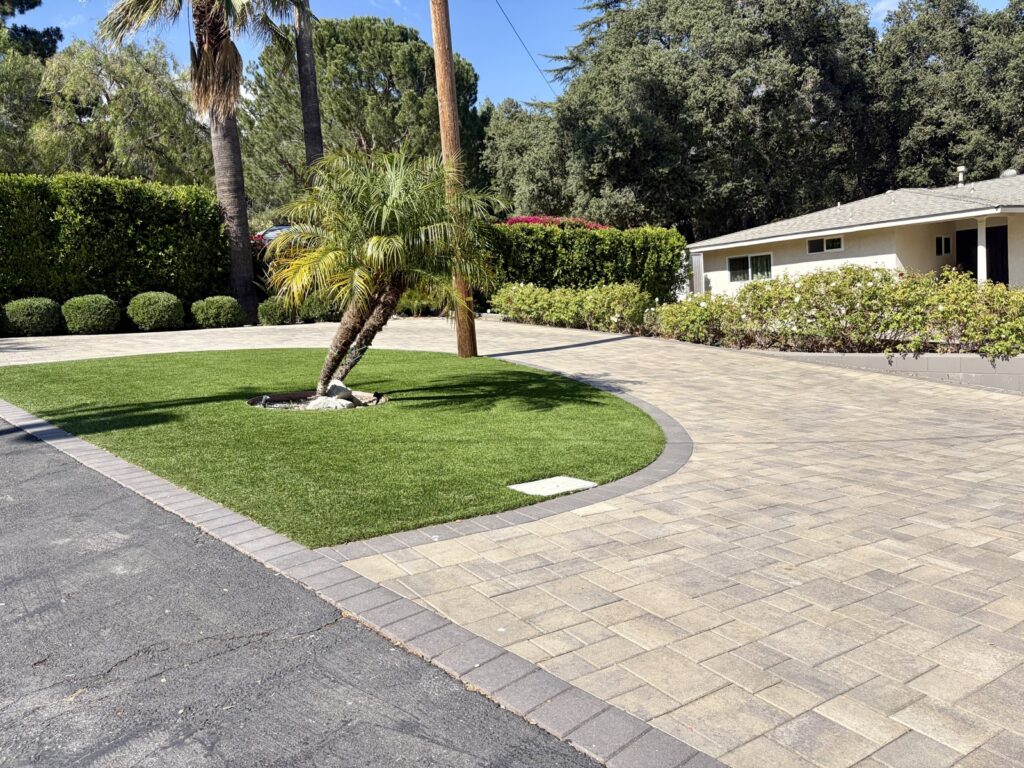
Most homeowners assume turf quality determines lifespan.
It doesn't.
When we inspect failed turf systems across Los Angeles, the same problems show up repeatedly: rippling, seam separation, pooling water, pet odor, and uneven settling. In most cases, the turf fibers are still usable. The failure happened underneath them.
A properly built system can last 15 to 20 years in the Los Angeles climate. A poorly built one may begin showing problems within three to five years regardless of how much was spent on the turf itself. The difference comes down to three things: base depth, compaction quality, and drainage design. Everything else is secondary.
Most turf problems begin before the first load of base material arrives.
Existing grass, roots, and organic material are removed to approximately 3 to 4 inches. Irrigation lines are identified and properly capped - not cut and buried. The subgrade is graded to establish positive drainage away from structures.
This step matters more in Los Angeles than most homeowners realize. Much of the region sits on clay soils. Clay doesn't drain. If drainage isn't addressed at the beginning, the problem eventually shows up at the surface.
The base is the structural component of the entire system.
We install 3 to 4 inches of compacted Class II road base aggregate at approximately 90% Proctor density. This creates the load-bearing layer that supports foot traffic, prevents movement, and provides the drainage path beneath the turf.
Many installations fail because the base is too shallow. Others fail because the base was installed but never properly compacted. Neither problem is visible on installation day. Both become obvious a few summers later - after the labor warranty has expired.
Not all turf products are built for the same application.
Residential lawns typically perform best with polyethylene fiber. High-traffic installations and putting greens require nylon. When evaluating turf, the specifications that actually affect performance are face weight, pile height, backing strength, and backing permeability - not product names or marketing claims.
Infill supports the turf fibers and influences how the surface performs over time.
Standard landscape areas often perform well with silica sand. Pet areas require antimicrobial infill. High-sun areas benefit from ZeoFill or HydroChill. This is one of the most commonly underspecified parts of a turf installation - and the consequences show up years later as odor, matting, or excessive surface temperatures.
Most rippling starts below the turf. The usual causes: insufficient base depth, inadequate compaction, or movement within expansive clay soils. We usually see this on installs where the contractor skipped the compaction step or substituted sandy soil for proper aggregate. The surface wrinkle is only the visible symptom.
Seams fail when adhesive application is poor, when seams are placed perpendicular to foot traffic, or when staples are used instead of proper bonding. This is where installers who rush the job show themselves. A seam problem is rarely just a seam problem.
When turf holds water, the drainage path has failed or was never properly established. We frequently inspect systems where the contractor never established a drainage slope - the base is flat, water has nowhere to go, and the backing perforations are overwhelmed.
Most pet odor problems aren't maintenance failures. They're specification failures. Landscape turf systems installed in pet environments often lack the drainage capacity and infill necessary to handle daily use. The smell is the result of system design, not homeowner behavior.
Most turf estimates focus on the visible product. The turf itself is often the least important part of the system.
A contractor should answer every one of those questions clearly. If they can't, that's usually where future problems begin.
Describe your project and we'll respond within one business day. No obligation.
Not sure what you need? Describe the problem and we'll tell you whether repair, replacement, or a new install makes the most financial sense.
We respond within one business day - real numbers, no sales call.